Get Slidell & St. Tammany News
Enter your email below to get local news in your inbox.

Flock Safety is making major changes to its controversial license plate reader network following months of investigations, criticism and growing concerns over how law enforcement agencies are using the technology.
The company announced that the default storage period for license plate data will be reduced from 30 days to seven days as part of a series of new privacy and accountability measures.
Flock Founder and CEO Garrett Langley said the changes “came from listening” as scrutiny of the company continues to grow nationwide.
Under the changes, law enforcement agencies using Flock will be required to provide a case number or code when conducting searches. Emergency searches may be allowed without one, but those searches will be flagged for review.
Flock will also require agencies to use an artificial intelligence powered auditing system designed to identify potentially improper searches. If the system detects suspected misuse, the user’s access can automatically be suspended until an administrator reviews the activity.
Individual jurisdictions will also gain more control over which outside agencies can search information collected by their cameras.
Multi factor authentication has already become mandatory, and Flock says an independent cybersecurity firm is reviewing its equipment and data systems. The company says those findings will be released publicly in September.
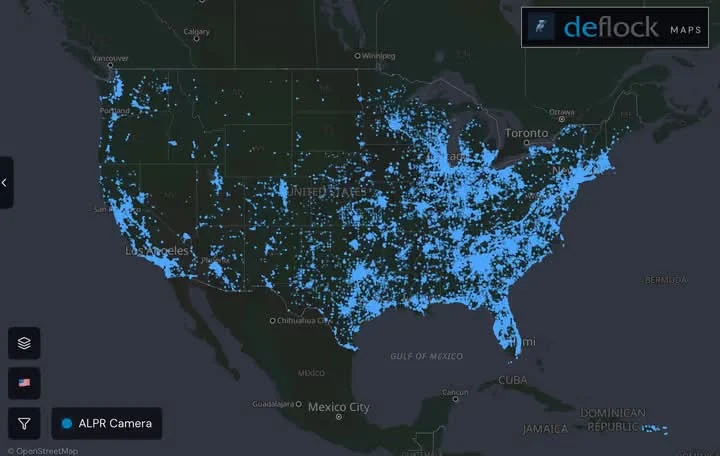
The changes come as Flock faces increasing backlash over the massive amount of information collected by its network of roughly 120,000 automatic license plate readers, according to news reports.
Investigations have uncovered allegations of officers using the system for personal purposes, including cases involving accusations of stalking and harassment.
Privacy advocates have also raised concerns about racial and political profiling, access to information outside traditional law enforcement channels and the sheer amount of location data being collected on ordinary drivers who are not suspected of committing a crime.
At the center of the controversy is a much larger constitutional question.
In many jurisdictions, police do not need a warrant to search a license plate or access information showing where a vehicle has been detected. Critics argue that when thousands of cameras are connected into a searchable network, the technology can potentially allow authorities to reconstruct a person’s movements over time without first convincing a judge that there is probable cause.
The issue has now reached Congress.
Kentucky Congressman Thomas Massie has pledged to introduce legislation that would cut federal funding to agencies using Flock cameras, while Tennessee Congressman Tim Burchett has called for the technology to be banned entirely.
Flock maintains that its cameras are an important crime fighting tool and says its technology provides evidence in more than one million criminal investigations every year. The company claims its cameras helped locate more than 1,000 missing people and identify more than 20,000 stolen vehicles in July alone.
Critics, however, remain skeptical that the newly announced safeguards go far enough.
The American Civil Liberties Union acknowledged that reducing the default retention period from 30 days to seven could be a positive development, but criticized several of the other changes as inadequate.
One major concern remains: agencies can still establish their own retention periods, and investigators can preserve information longer when it is connected to an investigation.
Langley is now calling on state lawmakers to impose stronger oversight themselves, including mandatory audits of law enforcement databases and tougher penalties for officers who misuse them.
Editor’s note: The paragraphs that follow are commentary by The Rabbit Hole, not part of the news reporting above.
The changes represent one of Flock’s biggest responses yet to the growing controversy surrounding its surveillance network.
But the larger question remains unresolved: How much information about the movements of Americans should the government be allowed to collect and search without a warrant?
The Fourth Amendment was written to protect citizens against unreasonable government searches. Technology may have changed dramatically since then, but the principle has not.
Reducing how long data is stored and creating stronger auditing systems may limit some opportunities for abuse. But for critics, safeguards implemented by a private company are no substitute for clear laws defining when law enforcement can access this information and what constitutional protections Americans have when their movements are being tracked.
Public safety matters. So does the constitutional right to be free from unreasonable government surveillance.
Technology this powerful shouldn’t weaken that protection. It should demand that government respect it even more.
Source: Flock Safety (company announcement).






Have you experienced this in your community? Join the conversation below.
Free. Straight to your inbox. Cancel anytime.



Join the conversation — create a free TRH News account to comment.