Newsletter Subscribe
Enter your email address below and subscribe to our newsletter

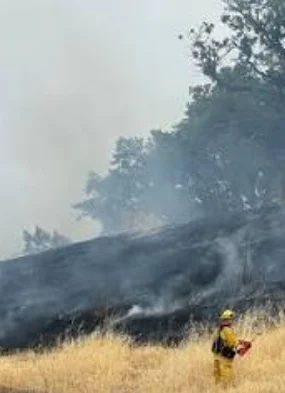
Roslyn, Washington, a town of about 950 people, is trying to get ahead of the kind of wildfire that has devastated communities across the West by deliberately burning parts of the forest around it.
Local fire crews recently carried out a controlled 55-acre burn on a forested ridge above town, using drip torches to ignite grasses and shrubs under carefully managed conditions. The goal of the burn is to remove the fuel that a wildfire would otherwise feed on and to create a buffer between the woods and the town itself.
The program traces back to Labor Day weekend 2017, when the Jolly Mountain Fire approached Roslyn. At the time, an incident commander warned town leaders that if fire got into the surrounding woods, large portions of the town would have to be written off as indefensible.
Roslyn has treated that warning as a turning point. Since 2017, the town and surrounding land managers have burned more than 500 acres and thinned trees across additional areas as part of an ongoing wildfire mitigation push. Chris Martin, the Roslyn Fire Department’s emergency management coordinator, and Francisco Martinez, who helped ignite the most recent burn, both took part in the work.
The effort connects to a broader state and federal push. Mike Norris, who works with the Washington Department of Natural Resources’ prescribed fire program, and Kyle Lapham, director of the state’s Certified Prescribed Burn Manager program, are both involved in expanding prescribed burning across Washington. Greg Dillon, who directs the U.S. Forest Service’s Fire Modeling Institute, has also been tracking the approach.
Roslyn is far from alone in facing this risk. More than 1,800 communities across the western United States face a similar wildfire threat, and nearly 72 million homes nationwide sit in areas at risk of wildfire. Towns like Roslyn are increasingly turning to prescribed fire, rather than fire suppression alone, as a way to manage that risk before the next major wildfire arrives.


Join the conversation — create a free TRH News account to comment.