Get Slidell & St. Tammany News
Enter your email below to get local news in your inbox.

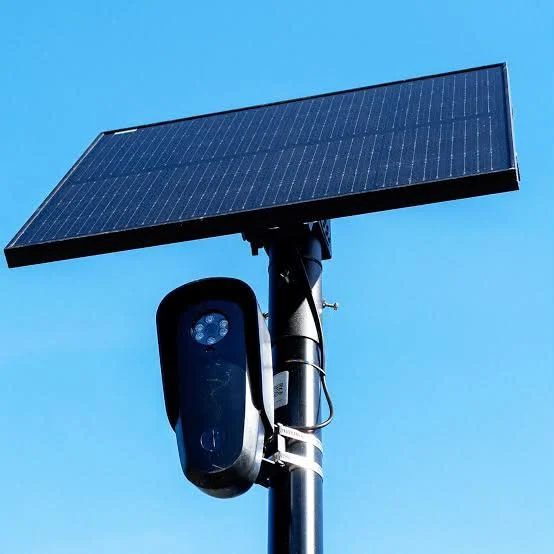
A Wisconsin criminal case is drawing new attention to the growing controversy surrounding Flock automated license plate reader cameras after investigators reportedly used the system to track a man’s movements across state lines and used his travel history as part of the justification for searching his vehicle.
According to court records reported by 404 Media, Edward Abrams-Phillips was already wanted on a warrant connected to bail jumping and a domestic violence case when a Flock camera alerted authorities to his vehicle.
Investigators then used Flock camera data to examine his movements and discovered that his vehicle had traveled from Wisconsin into Michigan and returned several hours later.
Recreational marijuana is legal in Michigan, while recreational marijuana remains illegal in Wisconsin.
According to the criminal complaint, investigators also reviewed previous trips Abrams-Phillips had made to Michigan. Authorities reportedly pointed to the frequency of those trips, along with Michigan’s legal marijuana market, as part of their reasoning that he could be transporting marijuana back into Wisconsin.
Police coordinated a traffic stop after the vehicle returned to Wisconsin. Abrams-Phillips was ultimately found with marijuana and charged with possession.
The case has attracted attention not simply because marijuana was discovered, but because of how Flock’s network was used to reconstruct the man’s movements.
Flock cameras are automated license plate readers that photograph passing vehicles and create searchable records containing information such as license plates, vehicle descriptions, locations and timestamps. Depending on agreements between agencies, law enforcement can potentially search camera data extending well beyond their own jurisdiction.
The technology has become increasingly controversial as Flock cameras have expanded across the country. Supporters argue the systems help police locate stolen vehicles, wanted suspects and people connected to serious crimes. Critics argue that interconnected camera networks can effectively allow authorities to reconstruct people’s movements without first obtaining a warrant.
There is also important context in this case: Abrams-Phillips was not randomly selected solely because he drove into Michigan. Authorities were already looking for him in connection with an outstanding warrant.
However, according to the court records cited by 404 Media, investigators specifically analyzed his interstate travel when developing their marijuana case.
The bail-jumping charge was eventually dismissed, while Abrams-Phillips was found guilty of marijuana possession.
The case adds another example to the growing national debate over how far automated license plate reader technology should be allowed to go and whether limits should be placed on how law enforcement agencies search and share the enormous amount of location data these cameras collect.
Also reported by: 404 Media.





Have you experienced this in your community? Join the conversation below.
Free. Straight to your inbox. Cancel anytime.



Join the conversation — create a free TRH News account to comment.