
Get Slidell & St. Tammany News
Enter your email below to get local news in your inbox.

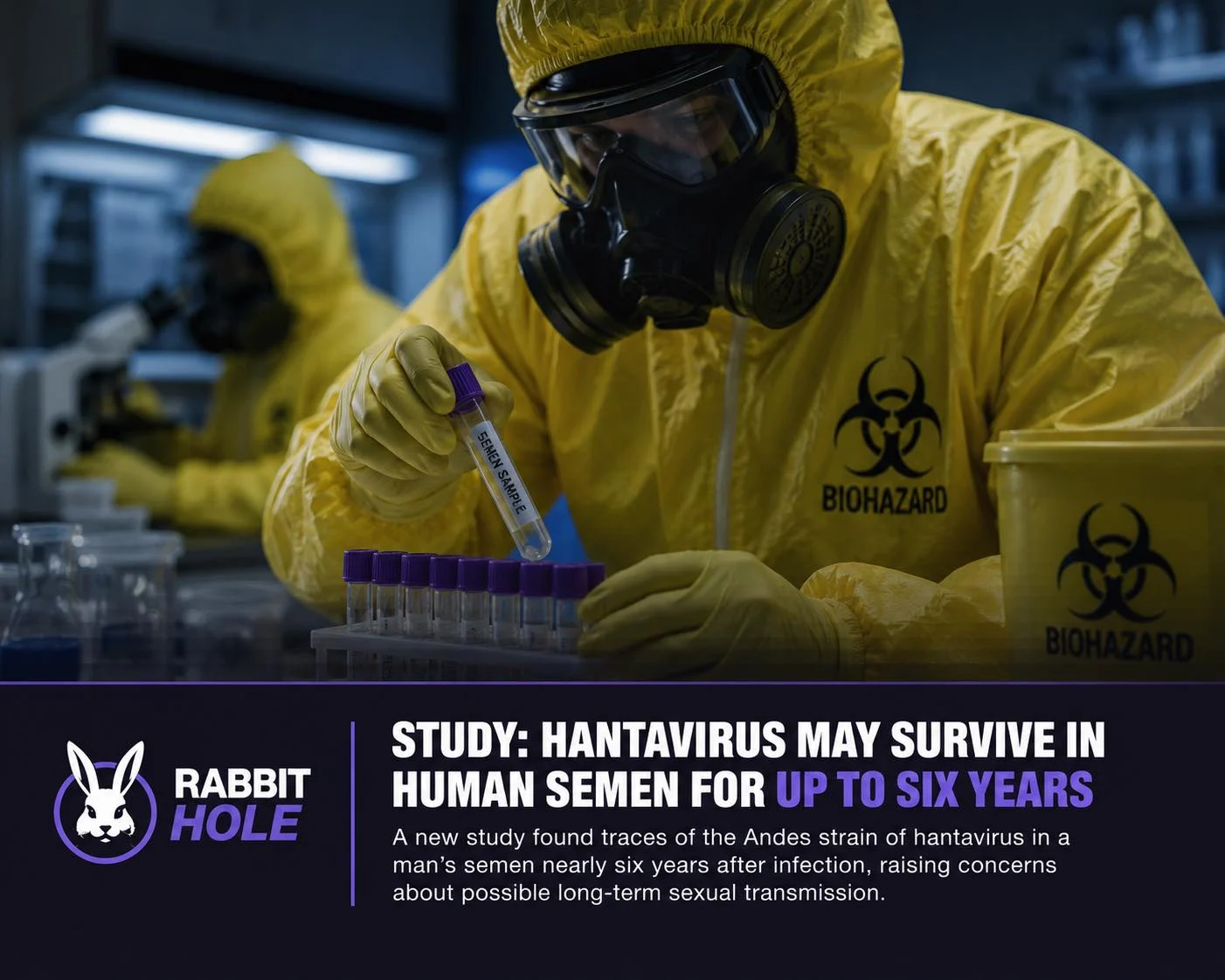
Update: The study was published in November 2023; it resurfaced during May 2026 coverage of the hantavirus outbreak.
A peer reviewed study published in the journal Viruses is raising new questions about how long certain viruses may remain inside the human body after recovery.
Researchers from Switzerland’s Spiez Laboratory reportedly found traces of the Andes strain of hantavirus in a man’s semen nearly six years after he originally contracted the virus.
According to the study, the virus had already disappeared from his blood, urine, and respiratory system, but traces were still detected roughly 71 months later.
Scientists say the findings may suggest some viruses could potentially remain sexually transmissible long after symptoms are gone.
Researchers also noted that viruses such as hantavirus and Ebola may persist in immune protected areas of the body, including sperm producing tissue, where the immune system responds differently.
The findings are expected to lead to additional research into how long certain viruses can remain hidden inside the body after apparent recovery.
Source: Züst et al., Viruses (MDPI), via PubMed Central.






What do you think? Join the conversation below.
Free. Straight to your inbox. Cancel anytime.




Join the conversation — create a free TRH News account to comment.