
Get Slidell & St. Tammany News
Enter your email below to get local news in your inbox.

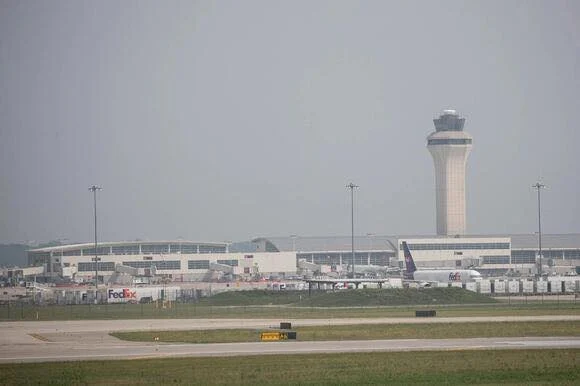
An Air France flight headed to Detroit Metro Airport was abruptly diverted to Montreal on Wednesday after U.S. officials discovered a passenger who had recently traveled from the Democratic Republic of Congo had boarded the aircraft despite new Ebola related travel restrictions.
According to U.S. Customs and Border Protection, the passenger should not have been allowed to board the flight due to emergency restrictions recently put in place over the growing Ebola outbreak in Central Africa.
Air France Flight 378 was originally scheduled to land at Detroit Metropolitan Wayne County Airport around 6:40 p.m. Wednesday evening. However, federal officials blocked the aircraft from entering the United States and redirected it to Montreal, Canada instead. Flight tracking data shows the plane landed in Montreal around 5:15 p.m. before eventually continuing on to Detroit later that night.
The diversion comes just days after the CDC and the Department of Homeland Security announced a 30 day travel ban affecting non U.S. passport holders traveling from the Democratic Republic of Congo, Uganda, and South Sudan. The new rules also require enhanced health screenings for travelers who have recently visited those countries.
Federal officials stated that all travelers who have recently been in those regions are now being routed through Washington Dulles International Airport, where specialized Ebola screening measures have been put in place.
The World Health Organization has declared the current Ebola outbreak a global public health emergency. Health officials estimate that at least 139 people have died so far in the outbreak involving the Bundibugyo strain of Ebola, with approximately 600 suspected cases reported.
WHO Director General Dr. Tedros Ghebreyesus warned that the actual numbers could be significantly higher because the virus reportedly spread undetected for weeks before being identified.
One major concern surrounding this outbreak is that there are currently no approved vaccines or specific treatments for the Bundibugyo strain.
U.S. health officials also confirmed that an American doctor working in the outbreak region became infected and was transported to a hospital in Germany for treatment. Several other Americans believed to have had high risk exposure are also being isolated in Europe as a precaution.
During a CDC briefing Wednesday, officials stressed that the current risk to the United States remains low. They said enhanced screening procedures, contact tracing, and coordination with airlines and international health agencies are already underway.
Ebola is a severe viral disease that spreads through direct contact with infected bodily fluids or contaminated surfaces. Symptoms can include fever, fatigue, muscle pain, vomiting, diarrhea, abdominal pain, and in severe cases, internal and external bleeding.
Health officials say the disease’s fatality rate has historically ranged anywhere from 25 percent to 90 percent depending on the outbreak and available medical response.
Authorities have not released details about the passenger involved in Wednesday’s diverted flight, including whether the individual showed any symptoms of illness.
The incident highlights growing global concern as health agencies race to contain the outbreak before it spreads further internationally.
Also reported by: CBS News.





Have you experienced this in your community? Join the conversation below.
Free. Straight to your inbox. Cancel anytime.



Join the conversation — create a free TRH News account to comment.