
Get Slidell & St. Tammany News
Enter your email below to get local news in your inbox.

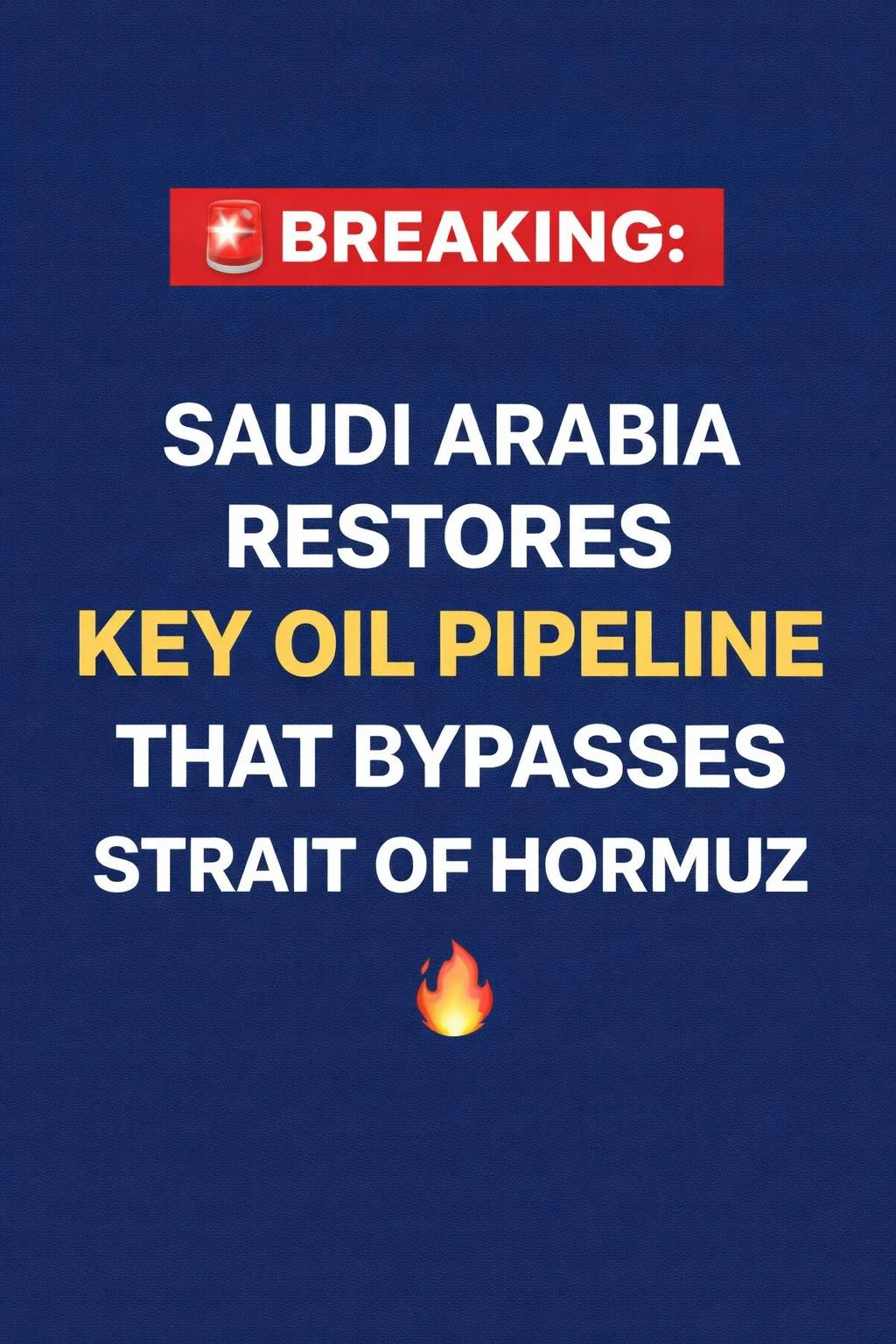
Saudi Arabia has restored its East–West oil pipeline to full capacity, now capable of moving up to 7 million barrels of oil per day across the country.
This pipeline runs from the oil fields in the east to ports on the Red Sea, The pipeline had been damaged in attacks before the repairs, according to Saudi officials. It allows shipments to bypass the Strait of Hormuz, one of the most vulnerable and strategically sensitive chokepoints in the world.
The Strait of Hormuz has long been a pressure point in global conflicts, with a significant portion of the world’s oil supply passing through it daily. Any disruption there has the potential to spike global energy prices and impact economies worldwide.
By restoring and utilizing this pipeline, Saudi Arabia now has a direct workaround that reduces reliance on that narrow passage.
Editor’s note: The section below is analysis and commentary by The Rabbit Hole, not reporting from the Saudi statement.
Why this matters to the United States:
This move is highly strategic for the U.S. and its allies. It helps stabilize global oil supply during rising tensions in the region, reduces the risk of supply disruptions if conflict escalates near Iran, and lowers the chances of sudden price spikes that hit American consumers at the pump.
It also weakens the leverage of any country attempting to threaten or control the Strait of Hormuz as a geopolitical weapon.
In short, this isn’t just about Saudi infrastructure. It’s about global energy security and protecting supply lines that directly impact the United States and its economy.
Source: Saudi Press Agency (Saudi Ministry of Energy statement).






What do you think? Join the conversation below.
Free. Straight to your inbox. Cancel anytime.



Join the conversation — create a free TRH News account to comment.