
Newsletter Subscribe
Enter your email address below and subscribe to our newsletter

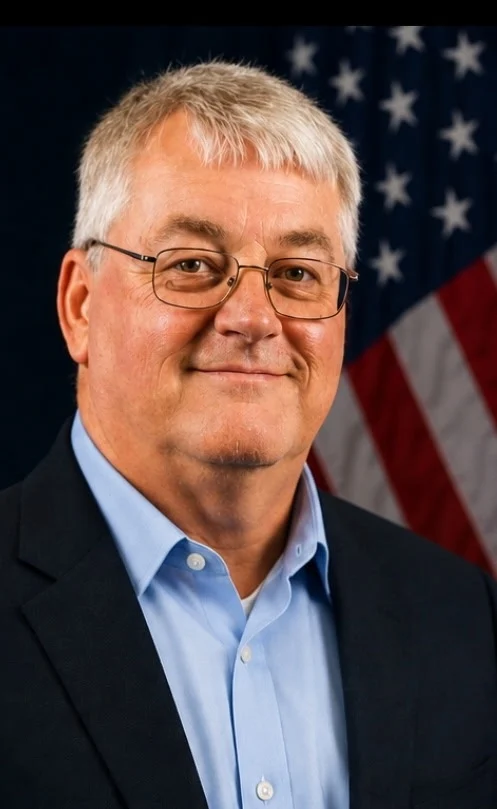
Pearl River police chief candidate Steven Ball sat down with TRH News to discuss why he is seeking the position, his approach to leadership and several changes he would like to see within the Pearl River Police Department.
Throughout the conversation, Ball focused heavily on community policing, officer training, professionalism and cooperation with neighboring law enforcement agencies. He also made it clear that he would not walk into the department assuming he already knows everything happening internally. His approach, he explained, would begin with learning the department, evaluating what is working and determining where changes are actually needed.
Ball described a lengthy background in public safety that has included law enforcement, emergency medical work and leadership responsibilities. He spoke about beginning as a reserve officer and eventually moving into leadership within a reserve division. He also discussed his experience working with a SWAT team, including serving in a medical role as a paramedic.
That background was an important part of the conversation, but Ball repeatedly returned to what he believes leadership should look like inside a small town police department.
If elected, Ball said his early time in office would include evaluating the department before attempting to make sweeping changes. Rather than immediately assuming he knows the answer to every problem, he wants to understand the people, policies and operations already in place and then determine what needs to be improved.
One of the clearest priorities Ball discussed was increasing the presence of Pearl River officers inside the neighborhoods they serve.
For Ball, community policing means more than simply having patrol cars moving through town. He wants officers spending time where residents live, becoming familiar with the community and allowing residents to become familiar with them. The goal is for people to recognize the officers serving their neighborhoods and for those officers to know the people they are protecting.
That type of visibility, he argued, can make a difference both in preventing crime and in strengthening the relationship between a police department and the public.
Ball also wants residents to be able to judge his performance based on results rather than campaign promises.
During the interview, TRH News asked what voters should be able to look at after his first year in office to determine whether he had actually accomplished what he promised during the campaign.
His answer suggested voters should not have to wait that long.
“You can come back in three months,” Ball said.
Ball pointed specifically to the culture and attitude surrounding the department and the level of community policing as areas where he believes residents should begin noticing a difference.
Professionalism was another major part of the discussion.
Ball addressed the relationship between police officers, town government and public meetings, arguing that officers have the same constitutional rights as anyone else but that the uniform carries additional responsibility.
If an officer wants to attend a town meeting as a private citizen and express an opinion, Ball believes that officer should be able to do so. His concern is maintaining a clear distinction between someone speaking personally and someone appearing to use the authority of the police department to make a political statement.
The broader point, according to Ball, is that disagreements should remain professional. Police officers will not always agree with elected officials, and elected officials will not always agree with police officers, but those disagreements should not prevent the different parts of local government from doing their jobs.
Training was another subject Ball returned to throughout the interview.
Small police departments do not always have the same resources available to larger agencies, but Ball believes that should not prevent Pearl River officers from receiving additional training. Instead, he wants the department to make greater use of relationships with neighboring law enforcement agencies.
Ball discussed the possibility of Pearl River officers participating in training opportunities alongside officers from surrounding departments. Cooperation could give a smaller agency access to opportunities that might otherwise be difficult to provide independently.
He also described a model in which an officer could attend specialized training and then bring that knowledge back to Pearl River, allowing what one officer learns to benefit others inside the department.
That philosophy extends beyond training.
Ball believes relationships between law enforcement agencies matter, particularly for a small department that may occasionally need resources or assistance beyond what it has available internally.
“Everybody should be friends,” Ball said while discussing cooperation among law enforcement agencies.
His point was not that departments will always agree on everything. Rather, neighboring agencies should be able to work together when circumstances require it. Relationships built before an emergency can become particularly important when officers suddenly need additional manpower, specialized resources or assistance from another agency.
The interview also touched on police pursuits.
Ball rejected the idea that officers should simply refuse to pursue people who flee from law enforcement. He argued that a policy where suspects know they will not be pursued could encourage more people to run.
“You have to pursue the bad guys,” Ball said.
At the same time, the discussion recognized that pursuits involve circumstances that officers and departments have to consider, including policy, safety and liability. His position was not that every situation should be treated identically, but that pursuit must remain an available law enforcement tool.
Technology and equipment were also discussed, including body cameras.
Ball views body cameras as something that can protect both sides of a police encounter. When questions arise about what an officer or member of the public did, video can provide a record of the interaction rather than leaving the entire dispute dependent on competing accounts.
The same general principle applies to other technology available to a department. Equipment can assist officers, document encounters and provide greater accountability when questions arise later.
Across the interview, Ball’s argument consistently came back to management.
His vision is not based on one dramatic change to the Pearl River Police Department. Instead, he described a department where expectations are established, officers receive training, residents see police in their neighborhoods, relationships with surrounding agencies are maintained and progress can be measured.
He also emphasized that understanding the department has to come before changing it.
That distinction matters in a campaign where candidates can easily promise immediate solutions before ever sitting behind the chief’s desk. Ball’s position is that the first step is learning exactly what is happening inside the department and then making decisions based on what he finds.
From there, he wants residents to judge the results for themselves.
The election for Pearl River police chief will be decided by the voters. TRH News will continue giving candidates an opportunity to explain their positions directly and giving the public the information needed to make its own decision.



Join the conversation — create a free TRH News account to comment.