
Get Slidell & St. Tammany News
Enter your email below to get local news in your inbox.


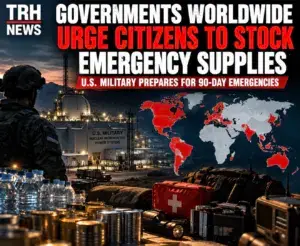
The United States is preparing military bases to operate through a prolonged national emergency, while European governments are urging citizens to prepare for disruptions to everyday life. The question is why these preparations are receiving so much attention.
Across the United States and Europe, governments are taking steps to prepare for scenarios involving widespread power outages, disrupted communications, fuel shortages and supply chain failures.
The developments raise an important question. What threats are governments anticipating, and how prepared is the general public if those threats become reality?
Pentagon Preparing For 90 Days Of Independent Operations
According to reporting by Fox News, the Pentagon’s FORTRESS initiative is intended to strengthen the ability of major American military installations to continue operating even if surrounding civilian infrastructure fails.
The initiative focuses on ensuring military bases can maintain essential services, including electricity, water, fuel and communications, for up to 90 days during a major emergency.
Proposed solutions include independent power systems, battery storage, microgrids and potentially advanced nuclear energy technology.
The implications are significant. Military planners are preparing for circumstances in which the infrastructure Americans depend on every day could become unreliable or unavailable for an extended period.
Europe Urging Citizens To Prepare
Meanwhile, European governments have been encouraging households to maintain emergency supplies sufficient to survive at least 72 hours without normal services.
These recommendations address possible disruptions involving electricity, water, communications, transportation and access to basic necessities.
European officials have identified several potential threats, including armed conflict, cyberattacks, natural disasters and other major emergencies.
Although the European preparedness strategy predates the latest Pentagon reporting, both initiatives highlight concerns about the vulnerability of modern infrastructure.
What About Louisiana?
For Louisiana residents, infrastructure resilience is particularly relevant.
The state has experienced firsthand how quickly hurricanes and other emergencies can disrupt electricity, fuel distribution, cellular communications and access to essential supplies.
But a widespread cyberattack or national power grid failure could create a different kind of emergency, potentially affecting multiple states simultaneously and complicating outside assistance.
Louisiana also hosts important military installations, including Barksdale Air Force Base and Naval Air Station Joint Reserve Base New Orleans.
Whether these installations will receive specific upgrades under FORTRESS, and on what timetable, remains an important question.
What Are Governments Anticipating?
The Pentagon’s preparations and Europe’s emergency supply recommendations do not establish that a war or nationwide infrastructure collapse is imminent.
They do, however, demonstrate that governments are actively preparing for serious disruptions that could last considerably longer than an ordinary power outage.
And that deserves public attention.
If military installations are being strengthened to survive prolonged failures of civilian infrastructure, Americans should be asking what comparable protections exist for hospitals, nursing homes, emergency responders and ordinary households.
The question isn’t whether everyone should panic. It’s whether the public understands the risks that governments are preparing to confront.
TRH News will continue examining these developments, including what they could mean for Louisiana and the Gulf Coast.




What do you think about this decision? What should local officials do next?
Free. Straight to your inbox. Cancel anytime.



Join the conversation — create a free TRH News account to comment.