
Get Slidell & St. Tammany News
Enter your email below to get local news in your inbox.

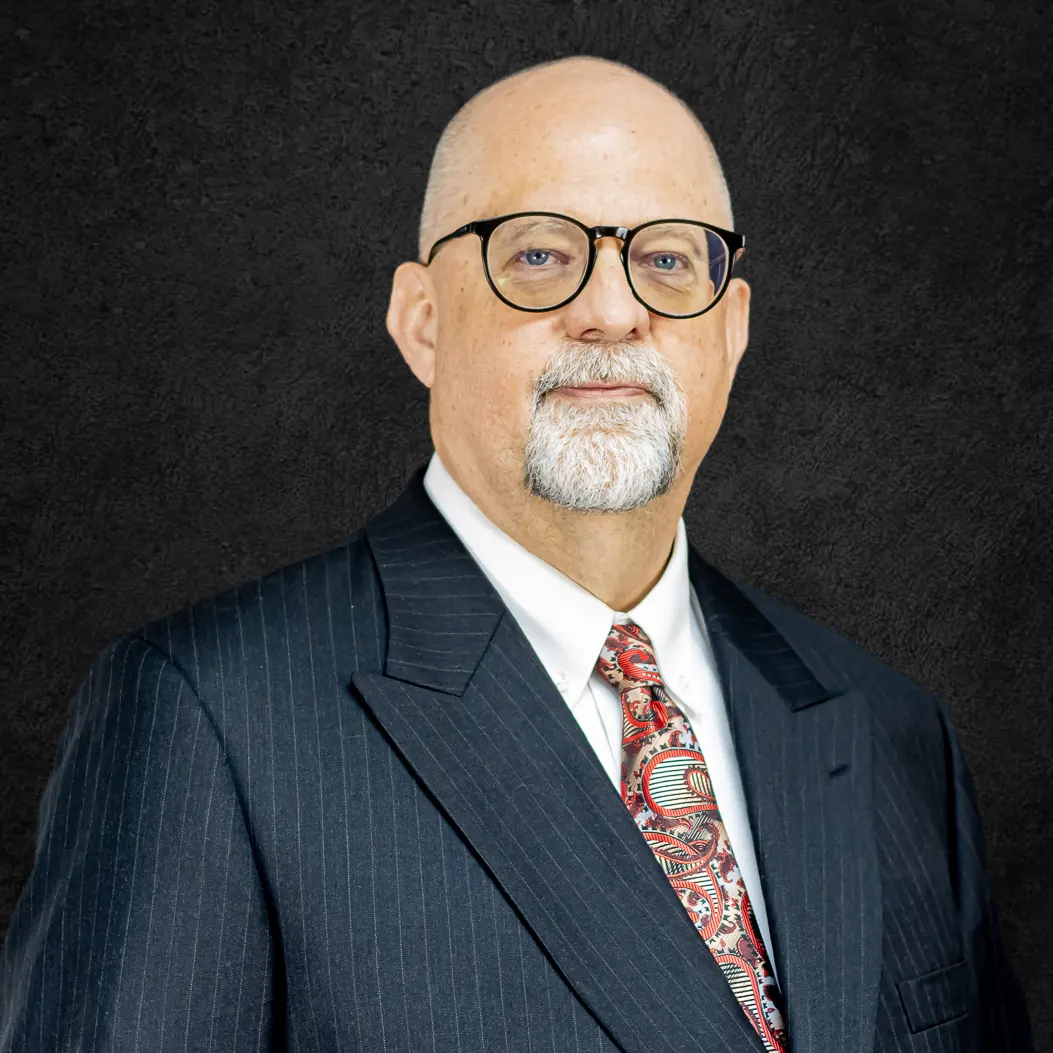
SLIDELL, La. — Ask Ben Clayton why, after nearly four decades practicing law and more than a quarter century running his own firm, he wants to become a judge at 68 years old, and his answer doesn’t begin with his résumé.
It begins with his faith.
Clayton believes becoming a judge is what God is calling him to do next.
“I’ve had years and years to contemplate the decision to run for judge,” Clayton told The Rabbit Hole. “I’ve had years and years to pray about it.”
Clayton is one of five candidates seeking the Division G seat on the 22nd Judicial District Court, which covers all of St. Tammany and Washington parishes. The election is Nov. 3.
For The Rabbit Hole’s Get To Know Your Candidate series, Clayton sat down with us for a conversation that lasted roughly 50 minutes.
We talked about the courtroom, his Christian ministry, young offenders, his connection to Alliance Defending Freedom, his criminal trial experience, a lawsuit filed against his law firm, what happens to that firm if he wins and why he believes voters should look beyond any candidate’s campaign résumé.
Nearly 40 Years Practicing Law
Clayton has practiced law for approximately 40 years and has operated his own law firm for more than 26.
His practice has taken him through civil and criminal matters, trials and appeals. His campaign describes experience in state and federal courts, workers’ compensation matters, child in need of care cases, personal injury, contracts, successions, disability claims, business matters and constitutional issues. He is also admitted to practice before the U.S. Supreme Court.
Clayton served as president of the Slidell Bar Association from 2007 through 2009.
But experience, he said, is only part of what voters should consider when choosing someone who could make decisions affecting their freedom, family, business or children.
“What is your character?” Clayton said. “I guess in a word, character.”
He said voters should look at whether a candidate can remain calm, listen and treat the people standing before them fairly.
“I don’t think that any voter should take any candidate for any office strictly at their word,” Clayton said. “I think they need to have their own perception and their own evaluation of the candidate.”
Faith Is Central To Clayton’s Life
Clayton doesn’t separate his Christian faith from his explanation of who he is.
He is an ordained minister and currently serves as an assistant pastor at a non-denominational Christian church. He has performed weddings and funerals, counseled people, worked with youth and participated in prison ministry.
His wife, Lisa, has been alongside him for decades. The two married in 1985 and raised five children.
Clayton described their marriage as a partnership and said Lisa has seen him through both the best and worst moments of his career.
“She sees a side of me that nobody else sees,” Clayton said.
He said his decision to seek the bench came after years of prayer and discussions with church leadership.
For Clayton, however, that raises an obvious question for voters: How would such deeply held religious beliefs affect people appearing before him who don’t share them?
We asked him directly.
Clayton said his faith requires impartiality rather than preventing it.
“You may come into the courtroom where I’m presiding, and you may be of a different religion or no religion,” he said. “Or you could be of this race, that race, the other race, this party, that party. It doesn’t matter.”
“What I’m to see is a human being.”
His Work With Alliance Defending Freedom
Clayton’s campaign identifies him as an allied attorney with Alliance Defending Freedom, a conservative Christian legal organization. His campaign website also lists his membership in the Louisiana Association of Christian Lawyers.
Clayton told The Rabbit Hole that being an allied attorney does not mean he is a member of ADF’s organizational structure.
He described it as a network of lawyers who may receive referrals or consultations involving religious liberty and First Amendment issues.
Clayton said he has represented street preachers accused of disturbing the peace.
But he also said he has turned away people seeking representation when he believed their methods crossed a line.
“I’ve had to turn away work by people who I thought were overzealous in their pursuit of their First Amendment rights,” Clayton said.
He argued that constitutional protections should extend equally to Christians, members of other religions, atheists and agnostics.
When Young People Enter His Courtroom
One subject Clayton repeatedly returned to was young people.
His involvement with them began long before his legal career.
Clayton was an Eagle Scout and spent six summers working at Camp Salmen beginning when he was 16. He taught camping, cooking, pioneering and knot tying and eventually became the camp’s aquatics director.
Years later, his ministry brought him into the lives of young people facing much different circumstances.
Clayton said he and his wife worked with children from the Fisher Housing Development in Algiers, picking them up and bringing them to church programs. He also participated in ministry at a juvenile detention facility in Jefferson Parish.
One experience still stays with him.
Clayton remembered a young man from the church’s youth ministry as happy, kind and pleasant. After leaving the church, Clayton said the teenager eventually became involved with a gang.
Then came word that he had been shot and killed.
Clayton attended his funeral.
“I still today think it was not only tragic, but how needless it was,” he said.
That history helps explain Clayton’s answer when we asked how he would approach young offenders as a judge.
He drew a clear distinction between serious violent crimes and lesser offenses committed by young people who may still have an opportunity to change their lives.
Clayton said murder, rape, armed robbery and serious drug crimes can warrant substantial prison sentences. He was equally clear that he isn’t advocating simply releasing offenders without consequences.
But for some young defendants charged with lesser offenses, he believes diversion, counseling and intervention may accomplish more.
“I’m not itching to put anybody in prison, knowing though that there are people who do belong in prison,” Clayton said.
“The ones who can be helped,” he said, should be given an opportunity to understand that “it’s not too late” to change their lives.
Clayton also said he has handled dozens of Child in Need of Care cases involving allegations of child abuse and neglect.
Division G currently handles juvenile criminal matters, although Clayton acknowledged that the judges of the 22nd Judicial District could change docket assignments.
If that happens, he said, it doesn’t change his reason for seeking the seat.
“Whatever you give me to handle, I’m ready to handle it.”
A Question About Felony Trial Experience
We also asked Clayton a question that produced one of the more direct answers of the interview.
When was the last time he personally handled a felony criminal case through trial?
Clayton said he wasn’t sure any of the felony cases he has handled had actually gone all the way through trial.
He didn’t try to characterize criminal defense as the primary focus of his career.
“The bulk of my practice is not criminal defense,” Clayton said. “It’s one of the areas of law that I practice in, but it’s by no means the largest area.”
Clayton said most of the criminal cases he has handled have ended in plea agreements.
He defended the role of plea agreements in the justice system, arguing that courts simply don’t have the capacity to try every case and that a properly negotiated agreement can produce a fair resolution for defendants, victims and society.
His broader courtroom experience, Clayton said, includes judge trials, jury trials and appellate work accumulated over nearly four decades.
How Clayton Says A Judge Should Use Discretion
Judges don’t simply determine guilt or innocence. They make decisions about evidence, bonds, sentencing and the management of cases.
We asked Clayton what should keep that discretion from producing different treatment for similarly situated people.
His answer began with the law.
Clayton said evidentiary standards don’t change depending on the identity of the litigant. Sentencing laws likewise establish boundaries within which judges must operate.
Within a sentencing range, he said, a judge has to consider the specific facts of the case, including aggravating and mitigating circumstances.
There isn’t, he said, a “mathematical algorithm” that produces the correct sentence.
That’s where judgment enters the job.
Clayton said a judge should listen to the entire case without prejudging it, apply the law as written and reach a decision that is fair and consistent with that law.
The Lawsuit Clayton Says Voters May Find
Clayton also addressed something he knew voters researching him could encounter.
A former client, Deborah Williams, sued Clayton Law Firm, Ben Clayton and his son Joshua Clayton.
Clayton said there are limits to what he can discuss because of his obligations regarding former client information, but he wanted to address what is part of the public record.
According to Clayton’s account, Williams had pursued an underlying claim through binding arbitration and lost. She subsequently brought litigation against Clayton, his son and the firm.
Clayton said that case was dismissed and encouraged anyone interested to examine the federal court record themselves.
“I’m not going to conceal the fact,” Clayton said.
He said it was the only time he had been sued.
What Happens To Clayton Law Firm
If Clayton becomes Judge Clayton, he said there will be a clear separation from the firm bearing his name.
He is already in the process of transferring full ownership to his son Joshua, an attorney at the firm.
Clayton said he had planned for Joshua eventually to take over and has spent the past several months mentoring him for that transition.
“Once I’m elected, I’ll have no ownership interest in the firm,” Clayton said.
At 68, Clayton also acknowledged that his age limits how long he could remain on the bench. He said he would be able to serve one six-year term.
Running A Court When Money Is Tight
Owning a law firm has also taught him something that doesn’t appear in courtroom transcripts, Clayton said: sometimes the money is there and sometimes it isn’t.
His wife, Lisa, joined this portion of the conversation and described watching the financial realities of running a business where there is no corporation guaranteeing the next paycheck.
Clayton said those experiences taught him to work with the resources available.
“I fight with the army I’ve got instead of the one I wish I had,” he said.
That led to one of Clayton’s more unusual proposals.
Discussing the possibility of severe local funding problems affecting court personnel, Clayton said he believes Louisiana law provides a mechanism through which the governor could temporarily activate members of the Louisiana National Guard to assist local government.
Clayton specifically raised the possibility of personnel with Judge Advocate General legal experience temporarily helping with administrative or law clerk duties.
He repeatedly characterized the idea as a last resort and temporary stopgap, not his preferred solution.
“Read my lips. I did not say martial law,” Clayton said.
He compared the idea to stopping bleeding during an emergency before addressing the underlying problem.
Why Now?
Clayton could have sought a judgeship earlier.
He didn’t.
At 68, with an established law practice, grown children and a wife he has been married to since 1985, he is instead seeking the bench at a point when he says he can serve only one term.
So we asked him why.
Clayton said if his motivation were prestige, retirement benefits or simply wanting to become a judge, he could have pursued the position years ago.
He says that’s not why he’s running.
“I don’t feel any particular need to be famous or in the spotlight,” Clayton said.
He believes this is simply what God wants him to do now.
That belief, Clayton said, also informs what he believes he owes the public if elected.
Campaign donations, he said, won’t purchase favorable treatment.
“You won’t get your tickets fixed. You won’t get any favors,” Clayton said. “I’m not selling favors to anybody.”
And ultimately, he said, voters shouldn’t elect him simply because he tells them they should.
They should listen, investigate and make that judgment themselves.
For Clayton, nearly 40 years of practicing law are part of that decision. So are his faith, his experiences with young people, his years running a business and the temperament voters see when they meet him.
“Experience is important,” Clayton said.
But, he added, voters also have to decide “what is on the inside of the candidate.”
The Nov. 3 election includes the Division G race for the 22nd Judicial District Court.
This interview is part of The Rabbit Hole’s Get To Know Your Candidate series, giving candidates an opportunity to answer substantive questions in their own words so voters can make their own decisions.



What do you think about this decision? What should local officials do next?
Free. Straight to your inbox. Cancel anytime.




Join the conversation — create a free TRH News account to comment.